

Walk through 1,500 years of power in a single afternoon. From the underground cisterns that kept Byzantium alive to the Ottoman sultan's private chambers — every stone in this city has a story, and most of them involve a throne.
Stops
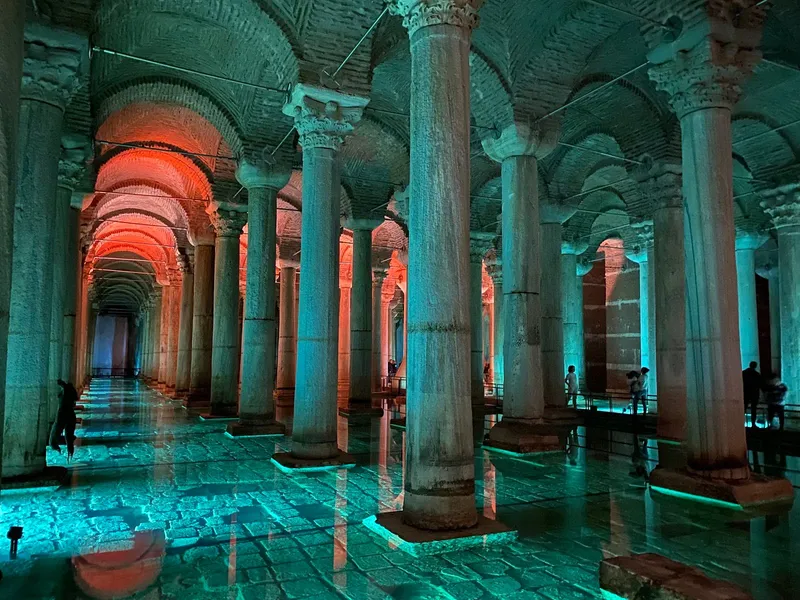
Descend the stone steps and the city above vanishes — replaced by an eerie underground forest of 336 marble columns reflected in still, dark water. Built by Justinian in 532 to store the city's water supply, the cistern lay forgotten for centuries until a scholar noticed locals lowering buckets thro
You'll feel the weight of fifteen centuries the moment you step inside — the vast dome seems to float above you, defying both gravity and logic. Built as a cathedral in 537 by Emperor Justinian, converted to a mosque after the Conquest, and now functioning as a mosque once more, Ayasofya is Istanbul
For nearly four centuries, the Ottoman sultans ruled an empire stretching from Budapest to Baghdad from behind these walls. Wander through four courtyards, each more intimate than the last — from the public grandeur of the Imperial Gate to the private whispers of the Harem. The treasury dazzles with
Sixty-one covered streets, over 4,000 shops, and a labyrinthine energy that hasn't dimmed since the 15th century. You'll get lost — that's the point. Follow the gleam of gold down one alley, the scent of leather down another, and the persuasive charm of carpet sellers everywhere. Beneath the painted
The last surviving fragment of the Byzantine imperial palaces — a three-storey stone and brick ruin built into the Theodosian walls near Edirnekapı. Recently restored and opened as a museum, its elaborate polychrome facade of red brick and white marble is unlike anything else in Istanbul. Murat Belg
Mehmet the Conqueror built this mighty fortress in just four months in 1452, at the narrowest point of the Bosphorus, to strangle Constantinople's supply line from the Black Sea. Three massive towers connected by thick curtain walls loom over the strait — inside, the grassy amphitheatre now hosts su
Reviews
No reviews yet.